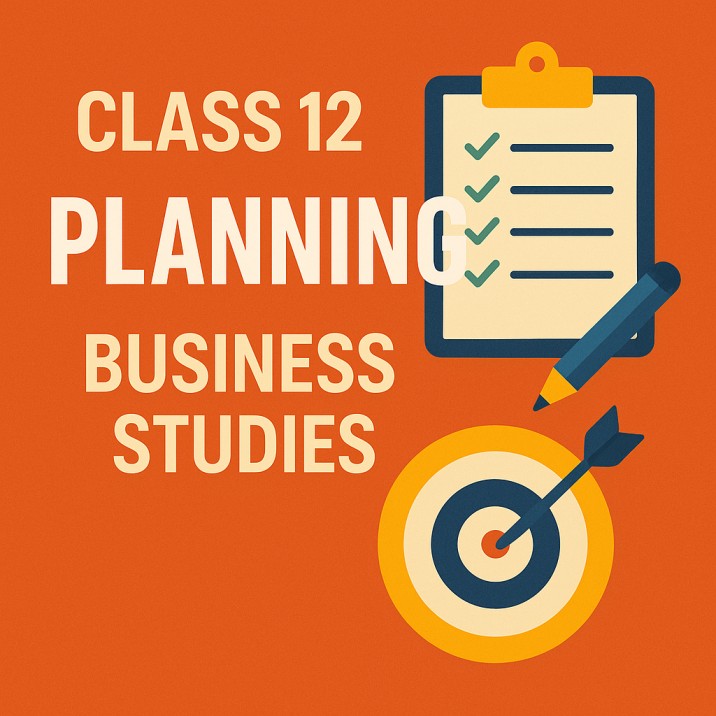
Planning – Class 12 Business Studies
Meaning of Planning
Figuring out what you want to accomplish comes first - then mapping how to get there. That means looking ahead, guessing what might happen, while getting ready with a game plan.
Features of Planning
1. Planning is Goal-Oriented
Its aim is hitting goals picked by the team - though sometimes it shifts based on what’s needed.
2. Primary Function of Management
Getting things ready comes before anything else when running stuff. Stuff like setting up teams, hiring people, giving orders, or keeping track relies on that prep work.
3. Pervasive
Thinking ahead matters no matter where you are in charge or which team you're part of.
4. Continuous Process
Thinking ahead keeps going. When things around shift, plans need updates too.
5. Involves Decision-Making
Leaders pick one option that works better than others when they’ve got choices.
6. Based on Forecasting
Guessing what might happen later means thinking about things like how markets could shift or how money stuff may change.
Importance of Planning
1. Provides Direction
Workers understand their tasks along with the right way to handle them, which cuts down on mix-ups.
2. Reduces Risks
Thinking ahead lets bosses guess what might go wrong later, so they can get ready just in case.
3. Facilitates Decision-Making
Thinking ahead sets up a way to pick what works best.
4. Promotes Coordination
Different teams link up to hit shared goals.
5. Improves Efficiency
Folks use what they’ve got without tossing stuff away.
6. Encourages Innovation
Thinking ahead helps leaders come up with fresh ideas, which leads to smarter plans.
Limitations of Planning
1. Time-Consuming
Figuring things out takes ages - there’s checking stuff, guessing what might happen, or just talking it through.
2. Costly Process
Pulling together info plus doing studies bumps up how much planning costs.
3. Does Not Guarantee Success
Things can go wrong because of stuff managers can’t handle.
4. Reduces Flexibility
After setting a direction, staying flexible can get tough.
5. May Reduce Creativity
Workers might sense restrictions since they’re stuck with fixed schedules.
6. External Factors Affect Plans
New rules from leaders, pressure from rivals, or quick tech shifts might wreck your strategy.
Planning Process
1. Setting Objectives
Picking clear targets kicks off the process.
2. Developing Premises
Leaders guess what might happen down the road.
3. Identifying Alternatives
Possible paths to hit the goals get spelled out.
4. Evaluating Alternatives
Every option gets checked - what’s good, what’s bad, how likely it works.
5. Selecting the Best Alternative
The best choice gets picked.
6. Implementing the Plan
Money, people, or tools get sent where needed while the strategy starts rolling.|Step one kicks off right after everything’s lined up.
7. Follow-Up
Closely checking things now and then keeps the strategy on track - fixes happen whenever something’s off.
:max_bytes(150000):strip_icc():format(webp)/marginalutility-cff85ddfd620484f8afbf9d3f6cf4b74.jpg)
:max_bytes(150000):strip_icc():format(webp)/TermDefinitions_Utility-e42a7528caa347f9b1af149065ab2b9d.jpg)