:max_bytes(150000):strip_icc():format(webp)/marginalutility-cff85ddfd620484f8afbf9d3f6cf4b74.jpg)
Concepts of Utility: Understanding How Satisfaction Works
When you buy something — a snack, a hoodie, a phone, anything — you’re basically chasing satisfaction. In economics, that satisfaction has a name: utility.
It’s all about how much happiness you get from consuming a product or service.
But utility isn’t just one thing. Economists use different concepts to understand how satisfaction behaves when we consume more and more goods. These concepts help explain why we crave something at first, get bored later, and sometimes refuse more of it even if it’s free.
Let’s break down these key concepts.
1. Total Utility (TU)
Total Utility means the total satisfaction you get from consuming a certain quantity of a good.
Example:
If you drink 3 slices of pizza and they give you 20, 15, and 10 units of satisfaction,
your total utility = 20 + 15 + 10 = 45 units.
It basically sums up the entire happiness you get from all the units you consume.
2. Marginal Utility (MU)
Marginal Utility is the extra satisfaction you get from consuming one more unit of a good.
Using the pizza example:
If the 3rd slice gives you 10 units of satisfaction, that 10 is your marginal utility for the third slice.
This concept explains why the first bite feels heavenly and the fifth bite feels like a mistake.
3. Law of Diminishing Marginal Utility (DMU)
This law says something very simple and very human:
The more you consume something, the less satisfaction you get from each additional unit.
The first slice: amazing.
Second slice: nice.
Third slice: okay.
Fourth slice: meh.
Fifth slice: regret.
Economists use this law to explain why demand curves slope downward — people are willing to pay less for additional units because additional units give less satisfaction.
4. Utility Is Subjective
Utility isn’t the same for everyone.
Two people can look at the same item and feel completely different.
Someone addicted to coffee gets huge utility from a cup at 6 AM.
Someone who hates coffee gets zero.
Utility depends on taste, mood, preferences, habits, and the situation.
5. Cardinal vs. Ordinal Utility
Cardinal Utility
Assumes we can measure satisfaction in numbers.
Example: “This burger gives me 20 utils of satisfaction.”
Ordinal Utility
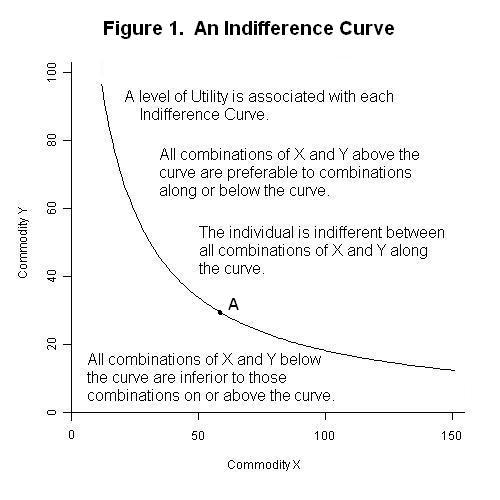
Assumes we can’t measure utility, only rank preferences.
Example:
“I prefer pizza over burgers and burgers over fries.”
Modern economics mostly uses ordinal utility because humans don’t think in numbers when judging satisfaction.
6. Utils: The Imaginary Unit of Satisfaction
Economists use ‘utils’ to show utility in examples.
It’s not real — just a tool to make concepts easier to understand.
7. Relationship Between TU and MU
Here’s the simple pattern:
- As long as marginal utility is positive → total utility increases.
- When marginal utility becomes zero → total utility is at its maximum.
- If marginal utility becomes negative → total utility starts decreasing.
This explains why we stop consuming at a certain point — satisfaction stops increasing.
8. Utility vs. Usefulness
Something can be harmful yet still have utility if it satisfies someone’s wants.
Example: Junk food, alcohol, cigarettes — bad for health, but still give utility to people who like them.
Economics doesn’t judge morality; it just measures satisfaction.
Conclusion
The concepts of utility help us understand how people make choices. Whether it’s food, clothes, or gadgets, utility determines how much we want something and how much we’re willing to pay for it. As satisfaction changes with each additional unit, our decisions change too.
Utility may sound like a technical idea, but it’s something you experience every day without even realizing it.
:max_bytes(150000):strip_icc():format(webp)/TermDefinitions_Utility-e42a7528caa347f9b1af149065ab2b9d.jpg)