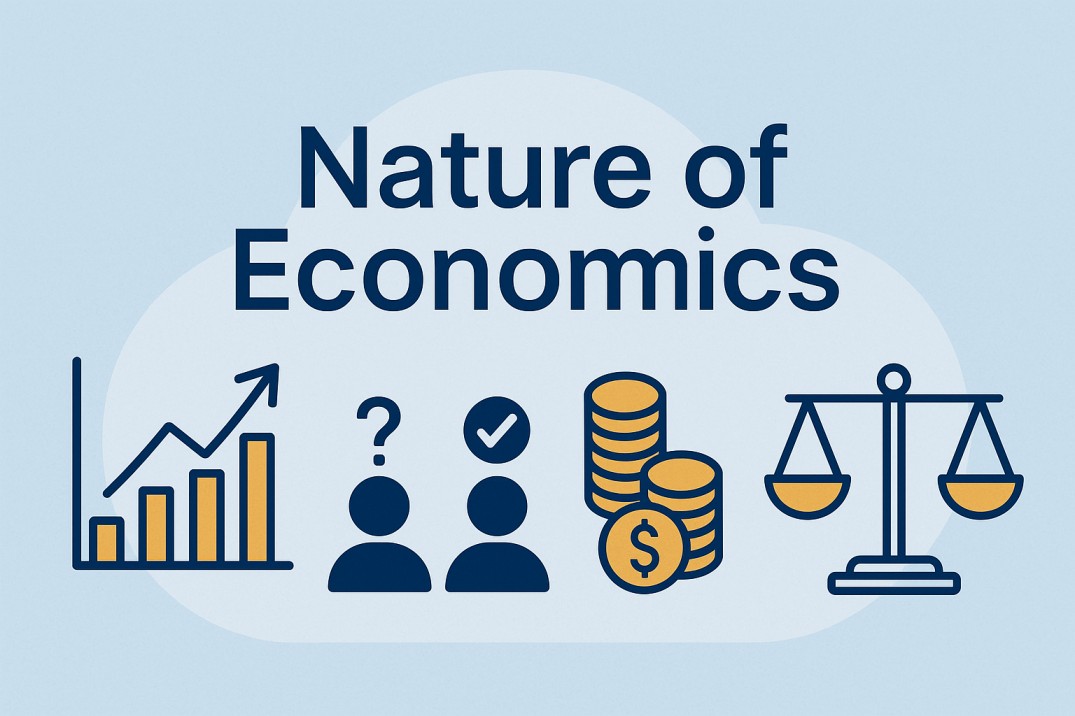
Nature of Economics - Class-12
Economics seems full of charts, numbers, and ideas, yet deep down, it's about folks - how they survive, decide things, or handle scarce stuff. What drives this field comes from regular choices: picking a job, grabbing a smartphone, setting cash aside, maybe managing a shop.
To get economics, you don't have to be super smart. All it takes is knowing this one thing:
People always want more, yet what’s available doesn’t grow. One wish leads to another, still supply stays fixed.
Everything in economics comes down to this one fact.
1. Economics as a Social Science
Economics is about humans, not robots - since feelings shape choices more than cold logic ever could.
It looks at how people act in everyday life - like picking this instead of that, how groups handle what they’ve got, also where cash moves inside a system.
Besides being tricky to predict, human actions mean economics can't match physics in precision. Still, it’s a field focused on spotting trends in what folks do.
2. Economics Studies Human Wants & Choices
Every day, people make choices:
Should I spend or save?
Does a company need to make extra stuff - or cut back instead?
Does a government need higher taxes - or lower ones?
Economics checks out these choices, then figures out what's behind them.
Decisions matter when resources are tight.
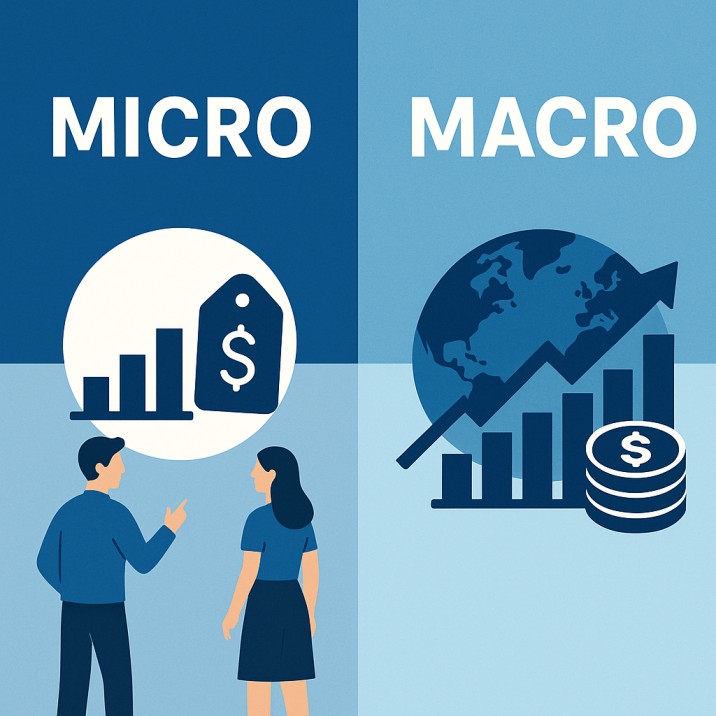
3. Economics Has Two Sides: Micro & Macro
Microeconomics
This feels like focusing on one person at a time - say, shoppers or businesses - or just one marketplace instead of everything at once.
It looks into things such as:
What makes costs go up or down
How companies pick what they make
How folks respond when costs go up or down
Macroeconomics
This is the overall view - the whole nation's financial system.
It studies:
Economic growth
Inflation
Unemployment
Government policies
One side shows part of it - then the other fills in what’s missing. Each adds something different but connected.
4. Economics Is Both Art and Science
Economics as a Science
It runs on facts, reasoning, also structured steps.
Like researchers checking ideas, folks who study money examine how numbers connect.
Economics as an Art
It’s useful when tackling real-life issues - like finding quick fixes or working through tricky situations
What’s the best way for a government to keep prices from rising too fast?
What’s the best way for a company to earn more money?
What’s a good way for families to handle money smarter?
Yeah, it combines logic with real-life choices - though sometimes one matters more than the other.
5. Economics Aims to Improve Human Welfare
In the end, economics is more than cash - it’s also about choices.
It's tied to feeling good - helping life improve.
It deals with:
Better handling of what we’ve got
Reducing poverty
Sharing money fairly
Improving living standards
Economics hands us ways to shape a fairer world.
6. Normative vs Positive Economics
Positive Economics
“What is.”
Factual, logical statements.
Joblessness rose up to 8%.
Normative Economics
“What should be.”
Value-based opinions.
The government ought to make extra job opportunities.
Each gives insight into how economies work - also guiding decisions on rules that affect money matters.
Conclusion
The study of money isn't just what textbooks explain.
It is about:
Choices we make
Resources we use
Our goal is people’s well-being
The kind of community we aim to create
Economics? It’s just about understanding everyday choices - like what drives people's actions or how to pick better options when nothing comes free.
:max_bytes(150000):strip_icc():format(webp)/marginalutility-cff85ddfd620484f8afbf9d3f6cf4b74.jpg)
:max_bytes(150000):strip_icc():format(webp)/TermDefinitions_Utility-e42a7528caa347f9b1af149065ab2b9d.jpg)