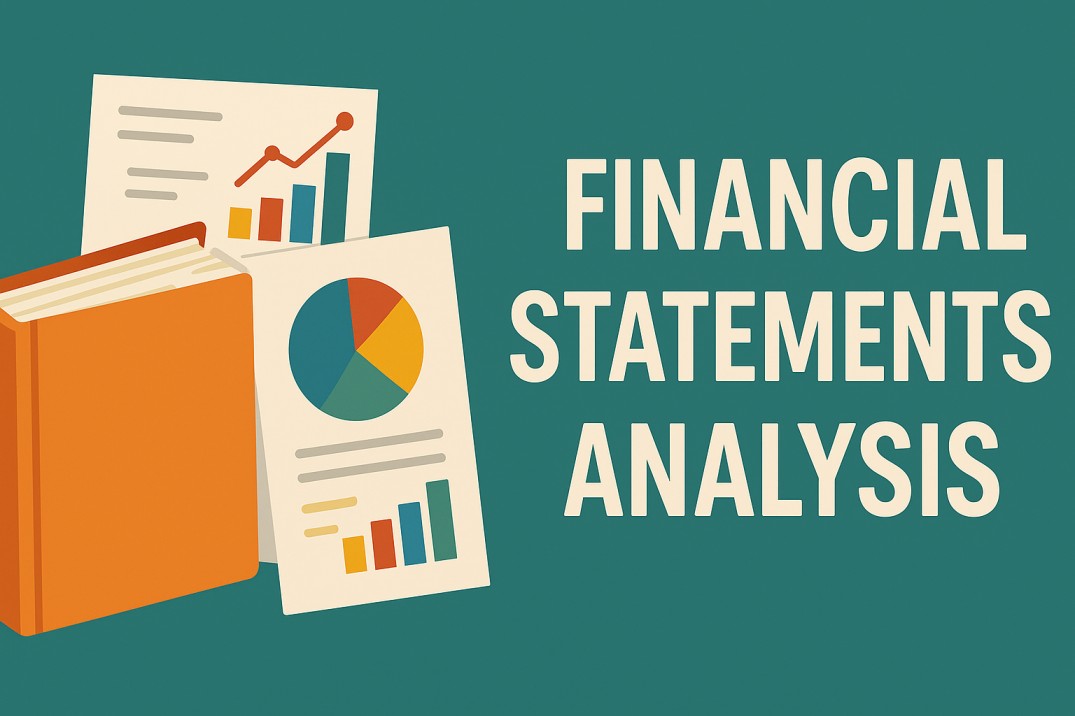
Financial Statements Analysis
Understanding a business only through its products and advertisements is never enough. To know what is truly happening inside a company, we need to look at its financial statements. They act like a report card, showing how the business has performed over a period of time. Financial Statements Analysis is the process of examining these reports to understand the financial health, stability, and future potential of a business.
What Are Financial Statements?
Financial statements are formal records that show the financial position and performance of a business. The two main statements you learn in Class 12 are:
- Balance Sheet – shows what the company owns (assets) and what it owes (liabilities), along with its capital.
- Statement of Profit and Loss – shows income, expenses, and profit or loss earned during the year.
On their own, these statements give information, but not the full story. That is where analysis becomes important.
Meaning of Financial Statements Analysis
Financial Statements Analysis means examining the financial statements in a systematic way to understand the strengths, weaknesses, and overall health of a business. It helps us answer questions like:
- Is the business profitable
- Can it pay off its short-term and long-term debts
- How efficiently is it using its resources
- Is the business stable enough to grow in the future
By analyzing numbers, trends, and ratios, we convert raw financial data into meaningful insights.
Objectives of Financial Statements Analysis
-
Assess Profitability
To check whether the business is earning enough profit and how its profit compares to previous years. -
Evaluate Financial Position
To study the company’s assets, liabilities, and capital to understand its strength and stability. -
Measure Liquidity
To find out whether the company can pay its short-term obligations on time. -
Study Efficiency
To analyze how well the company uses its resources like stock, cash, and fixed assets. -
Identify Trends
To compare the present performance with past years and identify growth patterns or decline. -
Assist in Decision-Making
Helps investors, creditors, and management make better decisions about investing, lending, and planning.
Tools or Methods of Financial Statements Analysis
1. Comparative Statements
These statements compare financial data of two or more years. It helps you see how much the business has grown or declined.
2. Common Size Statements
Here, every item is shown as a percentage of a common base. This makes comparison easier, even between companies of different sizes.
3. Trend Analysis
Shows the direction in which a business is moving over several years using percentages. It highlights long-term progress or problems.
4. Ratio Analysis
One of the most important tools. Ratios help measure profitability, liquidity, solvency, and efficiency. Examples include Current Ratio, Debt-Equity Ratio, Gross Profit Ratio, etc.
5. Cash Flow Statement
Shows the inflow and outflow of cash under operating, investing, and financing activities. It helps understand how well the company manages its cash.
Importance of Financial Statements Analysis
- Helps Investors decide whether to invest or not.
- Helps Creditors judge whether the company can repay its loans.
- Helps Management make better internal decisions.
- Helps Government in taxation and regulatory purposes.
- Helps Employees understand the stability of their workplace.
- Helps Compare performance with competitors and industry standards.
In simple words, financial statements analysis converts numbers into knowledge.
Limitations of Financial Statements Analysis
While it is useful, the analysis has some limitations:
-
Based on Past Data
It tells what has happened, not what will happen. -
Ignores Qualitative Factors
Factors like employee morale, reputation, and market competition don’t appear in statements. -
Possibility of Window Dressing
Companies may present statements in a way that looks better than reality. -
Different Accounting Policies
Two companies may use different methods of depreciation or stock valuation, making comparison tricky. -
Does Not Reveal Exact Future Risks
Sudden market changes or economic shocks cannot be predicted through financial statements.
Conclusion
Financial Statements Analysis is like understanding the story behind the numbers. For any business, it is essential to know not just what is happening today but what these figures indicate about the future. Whether you are a student, investor, manager, or even a government official, analyzing financial statements helps you make smarter decisions.

:max_bytes(150000):strip_icc():format(webp)/marginalutility-cff85ddfd620484f8afbf9d3f6cf4b74.jpg)
:max_bytes(150000):strip_icc():format(webp)/TermDefinitions_Utility-e42a7528caa347f9b1af149065ab2b9d.jpg)