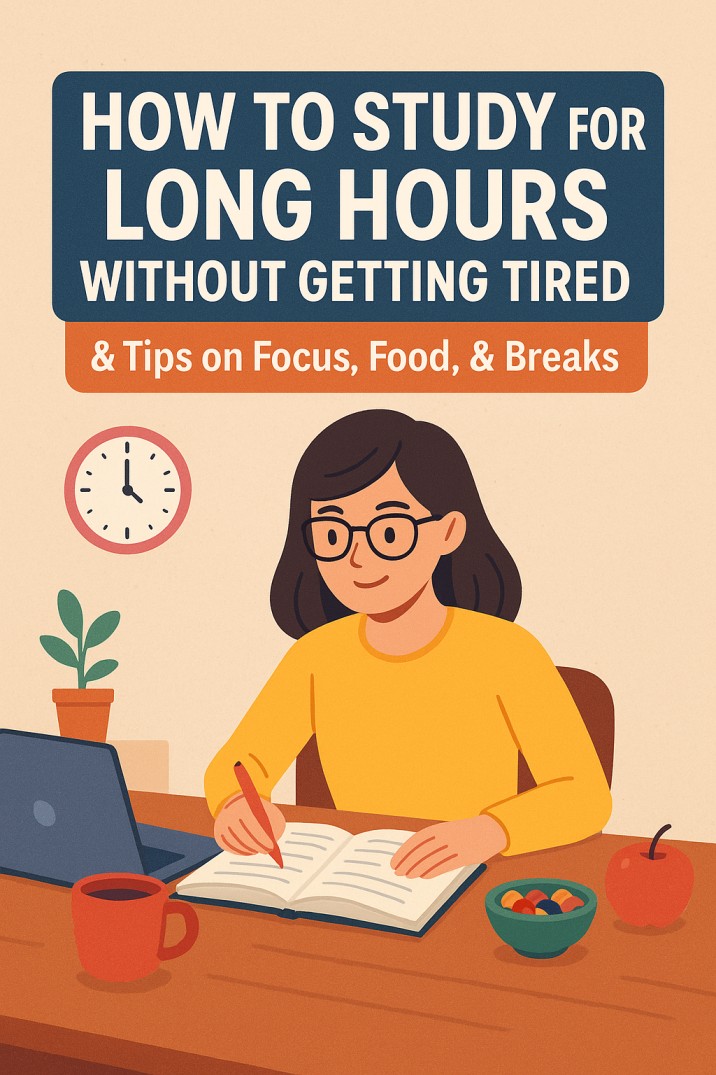
💪 How to Study for Long Hours Without Getting Tired (and Actually Remember Stuff)
We’ve all been there — staring at notes for hours, pretending to study while our brain feels like mush. Studying for long hours sounds productive, but if you’re exhausted, distracted, or running on caffeine and vibes, it’s just not worth it.
So, let’s fix that. Here’s how you can study for long hours without burning out — using smart focus techniques, proper food habits, and the right kind of breaks.
🧠 1. Set the Vibe Before You Start
Before you even open your books, set the environment right.
A clean, well-lit, and quiet study space instantly boosts focus.
- Keep your phone away or use focus mode (trust me, one “just 5 mins” scroll ruins everything).
- Use background music like lofi beats or rain sounds if silence feels too heavy.
- Have all your materials ready so you don’t keep getting up for small stuff.
Basically, make your space feel like it’s made for focus, not distractions.
🎯 2. Use Focus Techniques That Actually Work
You don’t need to sit for 10 hours straight — that’s just asking for burnout. Instead, use techniques that help your brain recover and reset while still staying in the zone.
🔸 The Pomodoro Technique
Study for 50 minutes, take a 10-minute break, and repeat.
After 3–4 sessions, take a longer 30-minute break. It’s like giving your brain small sips of rest instead of one giant gulp at the end.
🔸 The 2-Hour Block Rule
If you’re prepping for big exams, try 2-hour deep focus blocks. Turn off all distractions and go all in — then reward yourself with a snack, a walk, or some quick stretching.
🔸 Teach It to Remember It
When you teach a topic out loud (even to your wall), your brain works harder to understand and retain it. It’s called the Feynman Technique, and it’s gold for long study sessions.
🥗 3. Eat Smart, Stay Energized
What you eat has everything to do with how long you can focus. You can’t run a Ferrari on cheap fuel, right?
Here’s what helps:
- 🍎 Fruits & nuts: Keep apples, bananas, almonds, or walnuts nearby for quick energy.
- 🥪 Balanced meals: Go for protein-rich foods like eggs, lentils, or paneer — they help your brain stay alert.
- ☕ Hydrate, don’t over-caffeinate: Water keeps your mind fresh. Too much coffee = anxiety + crash.
- 🧃 Dark chocolate or green tea are great mini-boosters when you start feeling sluggish.
Skip the junk food and heavy meals during study hours — they’ll make you sleepy real quick.
🧍♀️ 4. Take Breaks Like a Pro
Breaks aren’t “wasting time” — they’re literally how your brain stays functional.
During breaks:
- Move around. Stretch, take a short walk, or just stand up and breathe.
- Avoid screens — your eyes need a break too.
- Listen to music, talk to a friend, or do something that makes you happy.
Even a 10-minute break can recharge your focus for another solid session.
💤 5. Sleep and Rest Are Non-Negotiable
Pulling all-nighters might feel heroic, but your brain disagrees.
Without proper rest, your memory, focus, and mood all crash. Aim for 7–8 hours of sleep, especially before exams.
Pro tip: If you’re super tired, a 20-minute power nap can feel like a mini reset button.
🔥 Final Words: Study Smart, Not Hard
Studying for long hours isn’t about suffering through endless notes — it’s about learning effectively while keeping your energy steady.
Set a study routine, feed your brain well, take meaningful breaks, and protect your sleep.
You’ll notice that you can actually study longer and better without feeling dead inside.
Remember: consistency beats intensity every single time.

:max_bytes(150000):strip_icc():format(webp)/marginalutility-cff85ddfd620484f8afbf9d3f6cf4b74.jpg)
:max_bytes(150000):strip_icc():format(webp)/TermDefinitions_Utility-e42a7528caa347f9b1af149065ab2b9d.jpg)