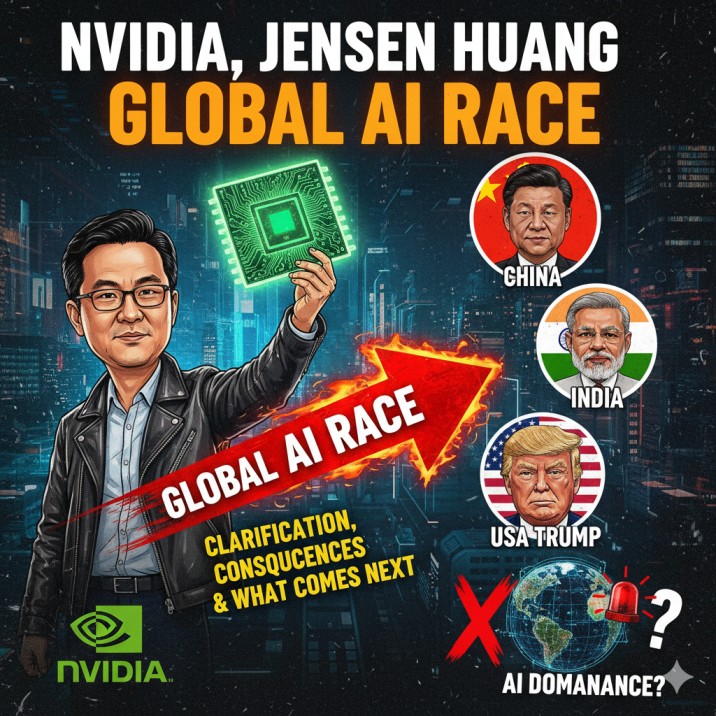
Nvidia, Jensen Huang and the Global AI Race: Clarification, Consequences and What Comes Next
Introduction
On November 5, 2025, a series of high-profile comments from Nvidia CEO Jensen Huang sparked headlines: a Financial Times report quoted him saying that "China is going to win the AI race." Within hours, Nvidia issued clarifications, stressing that Huang was summarising competitors' strengths and warning about the risks of isolating global developer communities — not conceding defeat. This post unpacks the original remark and the clarification, explores the tech-policy context (export controls, chip access, developer ecosystems), and outlines implications for companies, policymakers and the global AI landscape.
Setting the scene: why the comment mattered
A statement from the CEO of Nvidia — the dominant supplier of AI accelerators for training large models — carries weight because of the company's central position in the AI supply chain. Headlines suggesting Nvidia thought China would "win" feed investor anxiety and policy debate: if China accelerates faster, global leadership in AI could shift with far-reaching economic, security and ethical implications.
What was actually said (and what was clarified)
Reporting summarised Huang's point that China has a huge developer base, favorable energy economics and significant investment momentum — making it a formidable competitor in AI. Nvidia's clarification emphasised two core points:
- Huang did not mean to suggest the U.S. had already lost — rather, he warned that isolating Chinese developers could be counterproductive.
- American leadership in AI depends not only on hardware but on an ecosystem of developers, regulations, and collaboration that retains global talent.
The export-control dimension: chips, licenses and policy
U.S. policy in 2024–25 increasingly targeted advanced AI chip exports. The most advanced "Blackwell"-class chips are central to large-scale model training. Policymakers have weighed concerns about advanced chips being used for military or surveillance systems versus the economic and strategic interest of engaging broad developer communities.
Key policy dynamics:
- Restrictions limit exports of certain high-performance chips or their full configurations to China without licenses.
- Manufacturers and policymakers debate trade-offs: national security vs. global competitiveness and the health of the developer ecosystem.
- Companies like Nvidia navigate compliance while arguing that engagement with global developers strengthens their own innovation and business prospects.
Developers as strategic assets
Jensen Huang's concern about developers is strategic: a vibrant developer base accelerates innovation, creates demand for hardware, and drives distinctive use-cases that push global capabilities forward. If a major developer ecosystem is excluded — whether by policy or by commercial friction — the global pace and direction of AI advances could fragment.
What a 'China edge' might look like
If China gains relative momentum, scenarios include:
- Faster training of large models on local infrastructures due to cheaper energy or large-scale data availability.
- Rapid deployment of AI in verticals where regulatory approaches are permissive.
- Domestic ecosystems developing alternative chip stacks, models, and tools less dependent on U.S. suppliers.
Countervailing US advantages
The U.S. remains strong in key components of the AI value chain: advanced chip design, cloud platforms, leading-edge research labs and a global talent magnet in universities and startups. Policy choices that support R&D, chip manufacturing, and open developer engagement can sustain competitive advantages.
Business implications for Nvidia and peers
Short-term market reactions to the headlines were pronounced — share-price volatility shows how sensitive markets are to geopolitical-risk signals. For Nvidia, practical steps include:
- Compliance with export rules while advocating policy balance.
- Product segmentation — offering versions of chips or cloud services tailored for different regulatory environments.
- Investment in developer tools and collaborations that keep the company central to multi-national ecosystems.
Investor and market effects
Market reactions reflect the financial stakes: chips are central to cloud AI economics and corporate margins. When headlines suggest geopolitical fragmentation — or that a major market like China might fall out of easy reach — valuations respond. But long-term value depends on execution: how companies align product roadmap, manufacturing, and compliance.
Policy prescriptions: finding a pragmatic middle path
Some policy approaches to consider:
- Targeted controls: Focus on items with clear dual-use risks rather than blanket bans that fracture ecosystems.
- Alliances for trusted supply: Work with partners to secure supply chains while maintaining competition.
- Investment in domestic capacity: Substantial public-private investment in fabrication and workforce skills.
FAQs
Did Jensen Huang say "China will win the AI race"?
Initial reports paraphrased a warning that China has structural advantages in some areas. Nvidia clarified Huang's remarks, saying the emphasis was on avoiding policy choices that might weaken U.S. innovation by excluding developers.
Can export controls stop China from advancing in AI?
Controls can slow access to specific components but cannot alone stop a nation with large-scale investment from developing alternatives. Controls are part of a broader toolkit that includes diplomacy, alliances, and domestic investment.
How should companies respond to geopolitical risk?
Companies should diversify supply chains, ensure compliance, segment products for different markets, and invest in local developer engagement to maintain global relevance.
Conclusion
The headline that "China will win the AI race" captured attention because it touches on geopolitics, economics and the future of technology leadership. Nvidia's clarification underlines that the issue is complex: leadership in AI is not a binary outcome but a multifaceted competition shaped by policy, research, talent, infrastructure and international collaboration. For businesses, investors and policymakers, the takeaway is clear — build resilience, broaden developer engagement, and pursue targeted, strategic policy choices that preserve security while enabling innovation.
Reporting and commentary in this article drew on statements and clarifications reported by major news outlets and Nvidia's own clarification releases.